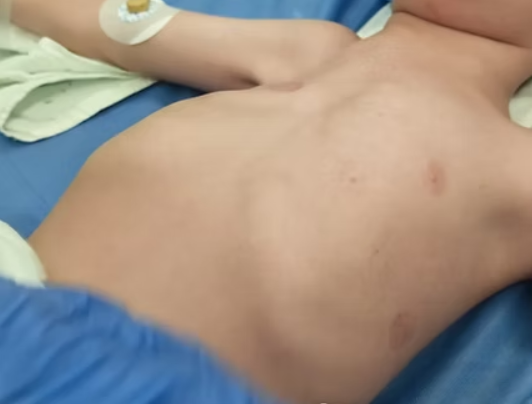
Poland syndrome is a rare condition that affects the structure and appearance of the chest wall and upper limbs. Its typical characteristics include abnormalities in the bony and soft tissue structures of the thorax, accompanied by ipsilateral upper limb pathologies, such as the absence or hypoplasia of the ribs, pectoralis major, pectoralis minor, and breast, as well as deformities like syndactyly, brachydactyly, and even scoliosis. While this condition most often affects the right side, both sides can occasionally be involved. At The Institute of Chest Wall Surgery (ICWS), specialists have devoted years of research and practice to understanding and treating this complex disorder.
Understanding the Poland Syndrome Cause
The exact Poland syndrome cause has not been conclusively identified, but several hypotheses have been proposed. Medical researchers suggest it may result from an interruption in the embryonic blood supply to the chest wall during early fetal development. Others believe that abnormal development of the pectoral muscle bud or genetic factors might also contribute.
Symptoms and Diagnosis
The manifestations of Poland syndrome vary widely in severity. Common features include absence or hypoplasia of the chest muscles, rib deformities, breast underdevelopment, and upper limb anomalies such as syndactyly or shortened fingers. When chest wall depression is pronounced, some patients may develop respiratory symptoms, including chest tightness, palpitations, or shortness of breath.
In addition, Poland syndrome may be associated with other conditions, such as Möbius syndrome or Klippel–Feil syndrome.
Patients with Poland syndrome also frequently present with multiple tumors, the most common of which is breast cancer.
Diagnosis is based not only on detailed physical examination and imaging studies but may also involve appropriate laboratory evaluations to assess potential involvement of the chest wall, upper limbs, and related organs. Chest CT is a fundamental diagnostic tool for evaluating thoracic structure, and when available, three-dimensional chest reconstruction can provide additional insight into the extent of skeletal and soft tissue abnormalities.
Advanced Surgical Care at The Institute of Chest Wall Surgery (ICWS)
At The Institute of Chest Wall Surgery (ICWS), treatment for poland syndrome integrates chest wall reconstruction and soft tissue correction. Their individualized surgical plans ensure safe, precise, and minimally invasive outcomes, helping patients restore chest wall structure and improve function while maintaining the highest medical standards.
