In many factory environments, pressure measurement plays a central role in maintaining reliable and consistent operations. When discussing automation components, terms like Industrial pressure sensor, Industrial pressure transducer, and Industrial pressure transmitter often appear together. They may seem similar, but each term reflects a specific function within a monitoring system. Companies like CSSPM Sensor design these components for practical field use, ensuring they work smoothly within automated production lines. Their experience in supporting B-end clients, including factories and distributors, helps them adapt products to varied mechanical and hydraulic conditions.
Differences Between Sensor, Transducer, and Transmitter
In an automation system, an Industrial pressure sensor detects changes in pressure and converts those changes into a basic electrical signal. When that signal needs further conditioning to match a control system, an Industrial pressure transducer provides the appropriate form of output. For users who require standardized signals for PLC integration, an Industrial pressure transmitter delivers stable and repeatable data over long cable distances. They design these categories with low minimum order quantity options, CE compliance, and support for customized ranges, allowing users to select solutions based on specific operational demands.
Practical Application and Key Product Features
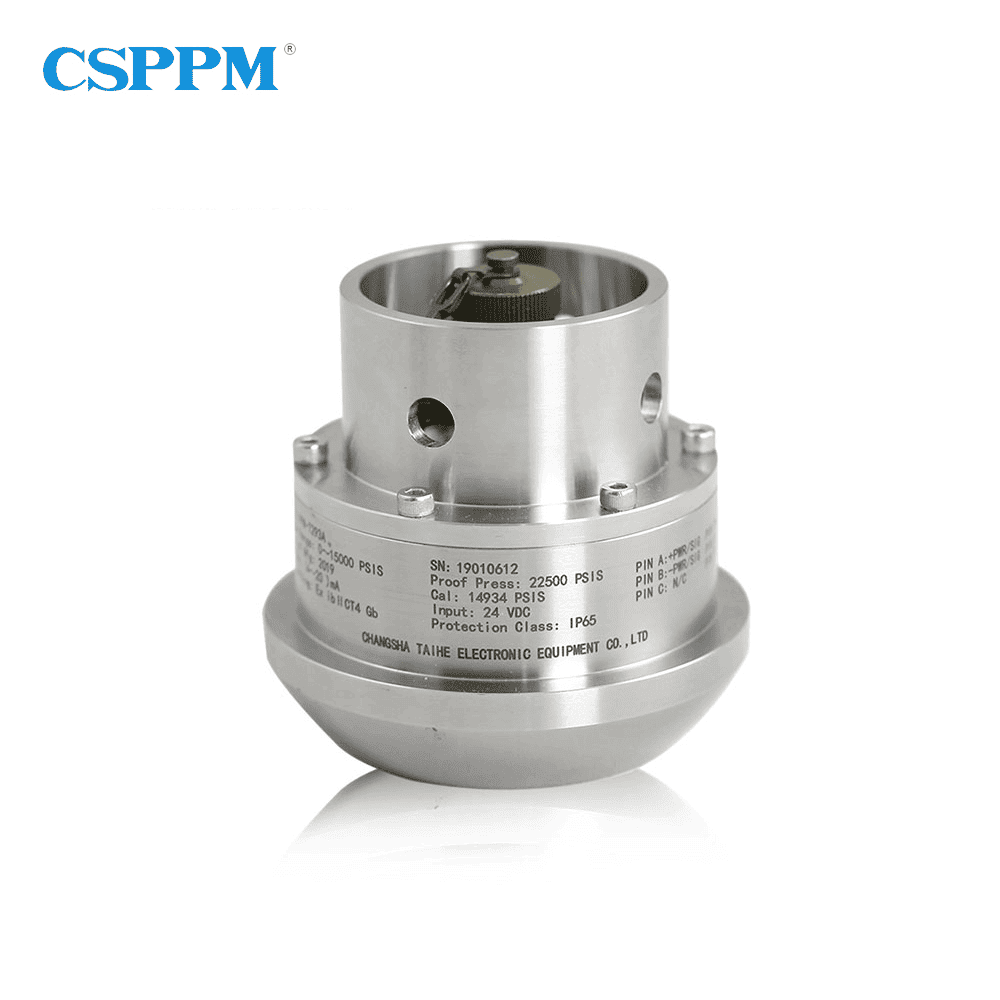
They offer several models suited for various process conditions, including the PPM-T293A 1502 Hammer Union Pressure Sensor. This model is engineered for rugged industrial settings with a pressure range from 0–5000 psi up to 0–20,000 psi. Output formats include 4–20 mA, 0–5 VDC, 1–5 VDC, 0–10 VDC, and 2 mV/V. The operating temperature spans –40 to 80 °C, and users can select 0.25%FS or 0.5%FS accuracy. Such specifications make it suitable for oilfield equipment, hydraulic machinery, and other B-end automation systems relying on an Industrial pressure sensor or Industrial pressure transmitter for stable feedback.
Conclusion: Selecting the Right Device for Automation
Choosing between an Industrial pressure transducer, an Industrial pressure transmitter, or a basic sensor depends on the signal type required by the control system. By understanding these distinctions, users can match device functions with operational needs. With customizable options and responsive technical service, the CSSPM Sensor supports factories and intermediaries seeking dependable solutions for automated industrial processes.
