Thermal protection is not determined by thickness alone. Material structure, trapped air, heat transfer pathways, and the interaction between individual layers all influence how effectively a system retains warmth. In applications ranging from winter apparel to industrial equipment, thermal insulations must be evaluated according to their intended operating conditions rather than simply their overall bulk.
Understanding the differences between single-layer and multilayer configurations helps manufacturers develop solutions that balance insulation efficiency, flexibility, weight, and practical usability.
How Heat Transfer Determines Insulation Efficiency
The performance of an insulating assembly depends on how it controls three fundamental heat-transfer mechanisms: conduction, convection, and radiation. Conduction occurs through direct contact between materials, while convection involves heat movement through circulating air or other fluids. Radiation transfers energy through electromagnetic waves, even without direct contact. Effective thermal insulations address these pathways through different structural approaches, such as porous materials, enclosed air pockets, and reflective surfaces.
A single-layer configuration uses one primary insulating component to restrict heat flow. Its effectiveness depends on thermal conductivity, thickness, density, and internal structure. Materials with low apparent thermal conductivity can provide substantial resistance without occupying excessive space. However, the surrounding construction also matters: compression, moisture accumulation, and gaps between components may change actual performance.
Multilayer systems introduce additional interfaces and functional components, allowing different materials to perform separate tasks. One layer may restrict heat conduction, another may reduce air movement, and an outer shell may protect the assembly against wind or moisture. The overall resistance of a properly constructed system can be calculated by considering the resistance of its individual layers and relevant surface and air-gap effects. ASHRAE guidance also emphasizes that moisture, material properties, and installation conditions influence the effective performance of an assembly.
Single-Layer Systems: Efficiency Without Excessive Bulk
Single-layer insulation offers a relatively straightforward construction, making it attractive for products with limited internal space or strict weight requirements. Fewer components can simplify manufacturing, reduce assembly complexity, and preserve flexibility. This approach is particularly useful in apparel, footwear, and portable equipment, where excessive thickness may interfere with movement, fit, or product appearance. Its practical value depends on whether one material can satisfy the required thermal resistance and durability under actual operating conditions.
Material architecture becomes especially important in this configuration. Conventional fibrous insulation generally retains warmth by trapping relatively still air between fibers, whereas cellular materials use enclosed microscopic spaces to restrict heat transfer. The size, distribution, and stability of these structures influence their insulating behavior. A well-designed single layer can provide useful thermal protection without relying entirely on loft, although its performance still needs to be assessed under representative temperature, humidity, and compression conditions.
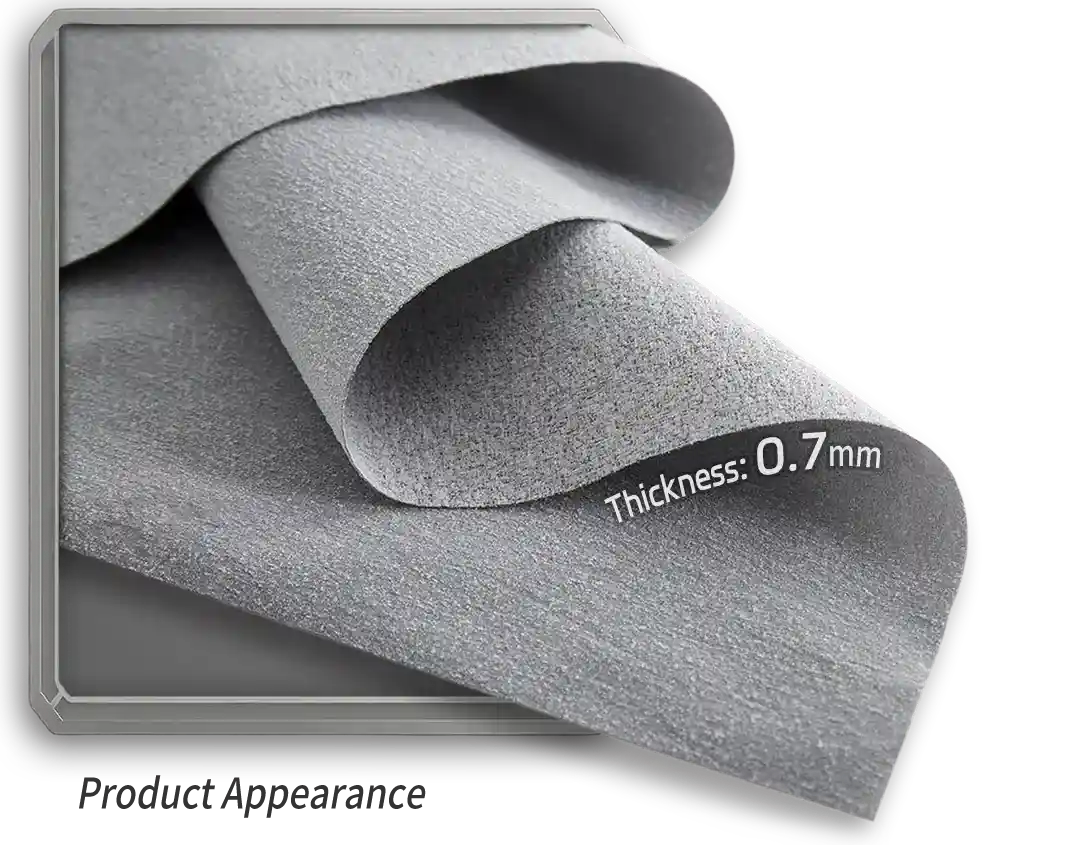
For example, Y-Warm’s YW-01 model has a single-layer thickness of just 0.7 mm and provides an approximately 10° C perceived warmth improvement under specified comparative test conditions. Its ultra-thin structure demonstrates how a specialized material can serve applications in which conventional bulky filling creates design limitations.
Multilayer Systems: Combining Different Functional Properties
Multilayer construction becomes valuable when a product must address several environmental challenges simultaneously. Rather than expecting one component to provide every protective function, designers can assign specific responsibilities to different materials. For instance, an outer textile may provide abrasion resistance and wind protection, an insulating layer may slow heat loss, and an inner lining may improve comfort against the skin. Such arrangements are common in technical clothing and outdoor equipment.
Another advantage involves the ability to adjust the assembly for different climates and activity levels. A lightweight configuration may use one insulation layer, while products intended for colder environments can incorporate additional insulating components. However, adding layers does not automatically produce proportional improvements. Each interface introduces potential contact resistance, while poorly designed gaps may encourage unwanted air movement. Excessive compression can also reduce the effectiveness of materials that depend on trapped air or cellular structures.
Selecting the Right Configuration for Real Applications
The decision between single-layer and multilayer construction should begin with the product’s operating requirements. Weight restrictions, available thickness, expected temperature range, exposure to moisture, flexibility, and mechanical durability all influence material selection. For example, compact footwear may prioritize insulation within a narrow internal space, whereas winter outerwear may accommodate several functional layers. Industrial applications introduce additional considerations, including equipment geometry, temperature fluctuations, and long-term material stability.
Technical testing provides a more reliable basis for comparing different configurations than thickness or material descriptions alone. Thermal conductivity measures how readily heat passes through a material, while thermal resistance describes its ability to oppose heat flow at a particular thickness. Testing should account for specimen preparation, temperature differences, moisture content, and compression where relevant. Finished-product evaluations are equally important because seams, fasteners, joints, and material interfaces can create thermal bridges or other weak points.
A qualified thermal insulation materials manufacturer should provide more than a general warmth claim when supporting product development. Relevant documentation includes technical specifications, applicable test standards, operating-temperature limits, mechanical properties, and processing recommendations. Buyers should also examine whether the material remains suitable after repeated bending, washing, lamination, or exposure to environmental stress.
Conclusion
Neither single-layer nor multilayer construction represents a universal solution to insulation challenges. The more appropriate approach depends on the relationship between thermal resistance, product dimensions, moisture behavior, and manufacturing requirements. For developers evaluating different thermal insulations, the most useful comparison comes from testing complete assemblies under realistic conditions instead of relying on isolated material values.
As an advanced materials technology company, Y-Warm focuses on ultra-thin insulation solutions designed to balance thermal performance with lightweight construction. Its technology offers manufacturers another option when conventional insulation thickness becomes a design constraint. Contact Y-Warm to explore its material solutions and discuss suitable insulation configurations for upcoming product development projects.
