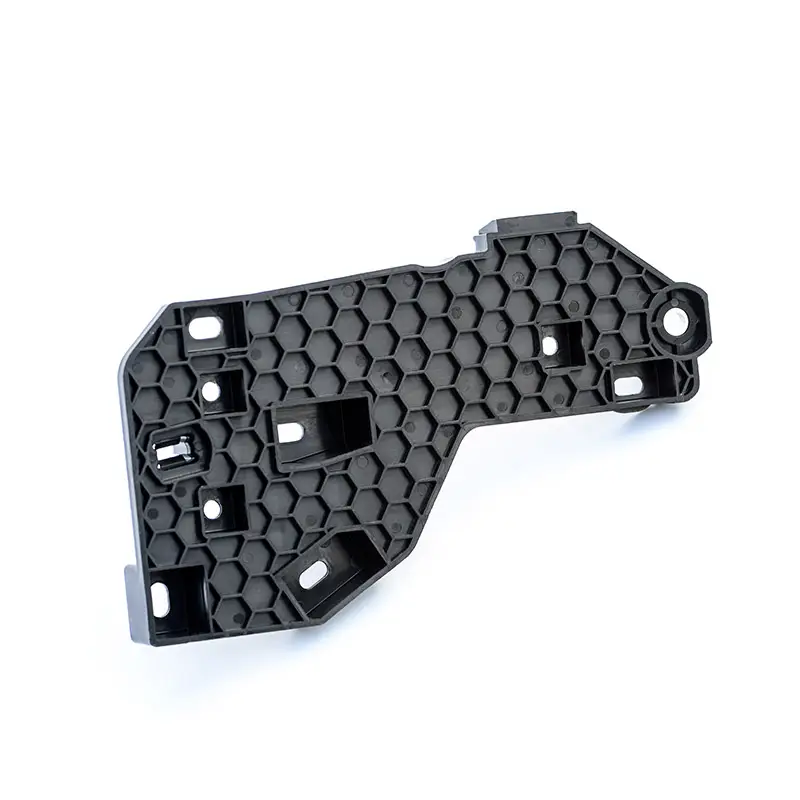
Ordering prototypes online can look deceptively simple: upload a CAD file, specify quantities, receive a quotation, and wait for the parts. For engineering teams, however, the real value of rapid prototyping online lies behind that interface. The supplier still has to interpret geometry, select a suitable manufacturing process, identify production risks, and convert digital information into measurable physical parts.
HordRT’s online prototyping workflow connects CAD design with manufacturing and validation. Depending on the project, the process may include design-for-manufacturing (DFM) review, manufacturing method and material selection, production, and inspection or functional evaluation of the resulting parts. HordRT offers CNC machining, injection molding, sheet metal fabrication, and urethane casting, with engineering and manufacturing support available according to the selected process and project requirements.
What “Online” Changes in the Prototyping Process
Online manufacturing does not eliminate engineering work; it moves much of the communication into a digital workflow. CAD files, material requirements, quantities, surface specifications, and project schedules can be exchanged before production begins.
HordRT’s quotation interface is designed to streamline the transition from a digital design to an initial manufacturing assessment. Customers can upload CAD files in commonly used formats, including STEP, STP, STL, IGES, SLDPRT, 3DM, SAT, and X_T, and the company states that a preliminary DFM report is provided with inquiries to help identify potential manufacturing considerations before production.
The RFQ Is More Than a Price Request
A useful online quotation starts with useful engineering information. A supplier cannot determine the appropriate manufacturing route from geometry alone if the project also has specific material, quantity, finish, tolerance, or functional requirements.
Part quantity can change the economics of the process. A handful of metal components may be more appropriate for CNC machining, while a plastic housing requiring repeated samples may justify injection molding. Sheet metal fabrication may be preferable when the prototype depends on bent or formed metal construction.
HordRT’s published service information specifically presents multiple processes rather than a single prototype method, allowing projects to use CNC machining, injection molding, sheet metal fabrication, or urethane casting according to their requirements.
That makes the RFQ an engineering input rather than merely a purchasing form. Clear project information gives the supplier a better basis for evaluating feasibility, tooling requirements, materials, and production timing.
Matching the Manufacturing Process to the Part
The usefulness of an online manufacturing interface can depend on how well the selected process matches the purpose of the prototype. Process selection should take into account the characteristics that need to be evaluated.
CNC machining can produce prototype components directly from metal or plastic stock and is useful when dimensional accuracy and material representation are priorities. Injection molding becomes more relevant when engineers need to examine molded geometry, production-grade thermoplastics, assembly behavior, or functional performance under representative conditions.
Sheet metal fabrication addresses a different class of prototype. Enclosures, brackets, panels, and structural components may depend on cutting, bending, welding, and assembly rather than a mold.
Urethane casting provides another route for producing polymer components without immediately committing to injection tooling. A diversified process portfolio therefore makes an online supplier more useful because the same digital project can be evaluated against several manufacturing routes.
Why DFM Feedback Matters Before Production
Uploading a CAD model does not guarantee manufacturability. Geometry that appears complete from a design perspective may contain features that complicate machining, molding, ejection, bending, or finishing.
HordRT’s rapid-prototyping process includes DFM analysis covering parting lines, gate position and size, ejector position, wall thickness, surface finishing, tolerances, and potential issues such as sink marks, gate marks, and warpage.
That review is particularly valuable before an online order becomes a physical production job. An engineer can receive feedback while modifications are still digital, rather than discovering a manufacturing constraint after material has already been processed.
For injection-molded components, this stage can also influence tooling decisions. HordRT’s current prototype-tooling information describes aluminum, soft-steel, and shared MUD insert configurations, with selection based on geometry, testing requirements, material, and expected quantity.
How Digital Communication Connects to Physical Quality
An online workflow should ultimately be judged by the quality of the physical output, not by how quickly a quotation form can be completed.
HordRT describes a production sequence that moves from DFM approval into machining and fitting, followed by mold trials and quality inspection for projects involving rapid tooling. Its documented process includes CNC, EDM, wire cutting, mold fitting, polishing, trial molding, and dimensional inspection.
This connection between digital review and physical inspection is important because prototype requirements are often dimension-sensitive. A component may look correct but fail at a mating interface, mounting feature, or functional dimension.
The same principle applies to material selection. HordRT states that its rapid prototyping service supports its usual range of metal and plastic materials, while its prototype-tooling service identifies production-grade thermoplastics such as ABS, PP, PC, PC/ABS, PA, POM, PBT, PMMA, TPE, and TPU.
What a Useful Online Prototyping Workflow Should Deliver
A strong rapid prototyping online experience should produce more than a transaction confirmation. The expected output should include a manufacturable interpretation of the CAD data, an appropriate process route, material alignment, technical feedback, and physical parts that can be inspected against the original requirements.
Lead time is also part of the equation. HordRT’s current prototype-tooling page states that typical tooling lead time is approximately 5–10 days, depending on complexity, mold structure, material, and inspection requirements. Its broader prototyping page promotes rapid turnaround and states that some prototypes can be produced as fast as one day, depending on the process and project.
For procurement teams, the practical evaluation therefore goes beyond headline speed. They should examine whether the supplier can review the design, recommend a suitable process, work with the required material, inspect critical dimensions, and communicate effectively throughout the project.
HordRT combines these functions within a manufacturing workflow that spans prototyping, tooling, molding, machining, and other fabrication processes.
The effective online prototype service is consequently not simply a digital storefront for manufacturing. It is a technical workflow connecting CAD data with engineering judgment, production processes, and inspected physical parts.
For product teams that need to move quickly without separating design communication from manufacturing expertise, that connection can make online prototyping a practical extension of the engineering process rather than merely a faster way to place an order.
