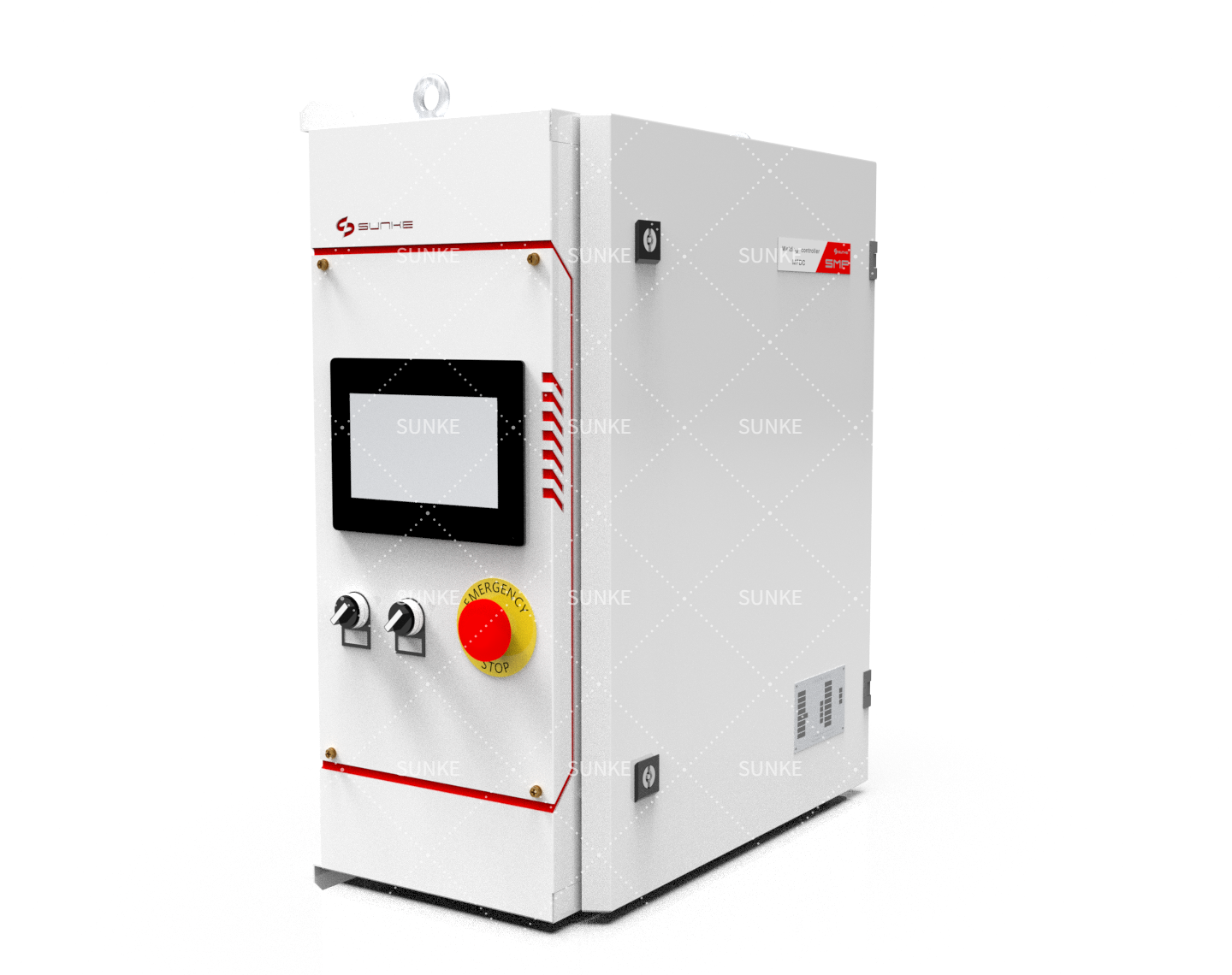
A custom resistance welding controller is not automatically necessary just because a welding application is demanding. Many production cells can use standardized control hardware successfully when the welding schedule, machine configuration, interfaces, and operating conditions fall within an established range. Customization becomes relevant when those standard functions no longer match the actual production process.
For automotive, battery, electronics, motor, and energy-storage manufacturers, the decision usually emerges from a specific engineering constraint. Multiple weld conditions, unusual machine interfaces, automated sequence requirements, feedback control, or application-specific data handling can expose limitations that are difficult to solve through ordinary parameter adjustment. The right question is therefore not whether a customized controller is more advanced, but whether the production process requires functions that a standard platform cannot provide efficiently.
The Need Usually Appears at the Welding Cell, Not in the Specification Sheet
Production engineers often recognize the need for customization only after integrating the welding equipment into a real manufacturing sequence. A controller may perform its basic function correctly but still create problems because its I/O logic, communication method, recipe handling, or feedback architecture does not correspond to the rest of the cell.
Consider an automated battery assembly line. The welding equipment may have to coordinate with positioning systems, safety interlocks, part-present sensors, pneumatic components, and a plant-level control system. If the welding sequence requires application-specific handshaking or operating logic, controller customization can become an integration requirement rather than an optional feature.
The same issue appears in automotive body welding and high-volume component production. A cell containing numerous weld points may require many distinct welding schedules and consistent control of parameters across different workpieces. A standardized controller can be suitable if those requirements are already supported. Custom development becomes more relevant when the production logic falls outside that established configuration.
Three Signs That a Standard Controller Is Reaching Its Limit
First, the welding process contains too many distinct control conditions. Different materials, thicknesses, joint configurations, or electrode arrangements can require different welding schedules. Sunke’s published controller information, for example, describes systems supporting multiple programmable weld schedules, illustrating why schedule capacity and selection logic can become significant in complex cells.
Second, the resistance welding controller must behave differently from the standard machine sequence. Integrators may require particular PLC communication, fieldbus behavior, valve control, alarm handling, or external recipe selection. Their documents fieldbus options including Profinet, Profibus, DeviceNet, EIP, and CC-Link on its MFDC and MFAC controller platforms, showing the type of integration layer that may need to be matched to an automated line.
Third, process feedback becomes part of the control strategy. Some applications need more than a fixed current-and-time schedule. Secondary feedback, adaptive functions, or real-time process information can become important where production variation has a measurable effect on weld consistency. Their MFDC information includes secondary feedback and adaptive control functions, while its automotive material describes dynamic resistance monitoring and adjustment.
Customization Should Follow the Process, Not the Other Way Around
A common purchasing mistake is to begin by asking a supplier to “customize the controller” without first defining what the welding process actually requires. That approach can produce unnecessary development work without resolving the original manufacturing problem.
Engineering teams should first map the weld cycle. What initiates the weld? Which conditions must be verified before firing? Which welding parameters change between products? Does the process require single-pulse, multi-pulse, or continuous operation? Which signals must be exchanged with the PLC or robot? What should happen if a weld is interrupted or a monitored value moves outside its permitted range?
The answers determine whether customization belongs in software logic, communication, feedback functions, hardware interfaces, or a combination of these areas. The required power technology also matters. MFDC, MFAC, and stored-energy welding systems have different operating characteristics and therefore should not be treated as interchangeable controller platforms. Their product range, for example, separates MFDC, MFAC, and capacitive-discharge welding control solutions.
What Engineers Should Define Before Asking for a Custom Controller
A useful specification starts with the application rather than the controller model. Material type and thickness establish the welding context, while required current, welding time, production cycle, and electrode arrangement define the operating envelope.
Interface requirements deserve equal attention. Engineers should document input power, required welding output, cooling conditions, communication protocol, valve-control requirements, feedback expectations, and special adaptive functions. Their selection guidance specifically asks customers to provide application material and thickness, input voltage, welding current and time, welding beat, and special requirements such as bus communication or adaptive functions.
Such information also makes supplier comparison more meaningful. Instead of comparing controllers based mainly on headline current ratings or feature lists, engineering teams can determine whether each proposed system actually fits the intended welding process.
Supplier Capability Determines Whether Customization Becomes a Production Solution
Customization is ultimately an engineering relationship. A supplier needs to understand the controller, welding power source, machine, and automation environment well enough to identify interactions between them.
That is particularly relevant during commissioning. A modified interface or control sequence can affect fault recovery, recipe management, maintenance procedures, and operator interaction. Documentation and technical support therefore matter alongside the customized hardware or software itself.
Sunke states that its controllers are developed across both hardware and software and that it provides customization covering hardware interfaces and software development. Its published controller portfolio also includes MFDC and MFAC platforms with programmable schedules, feedback functions, and industrial communication options.
When the Custom Route Is Technically Justified
The decision becomes relatively clear when a manufacturer can identify a specific requirement that cannot be handled effectively through standard configuration. That requirement might involve unusual automation logic, application-specific interfaces, specialized feedback, complex recipe management, or a welding sequence that does not fit the standard control architecture.
Customization is less compelling when the real problem lies elsewhere. Unstable electrode force, poor part fit-up, inappropriate welding parameters, transformer limitations, or inadequate maintenance should not automatically be treated as controller deficiencies.
For decision-makers, the practical test is simple: identify the production constraint, prove that controller functionality is part of its cause, define the required modification, and establish how the result will be validated. If all four conditions are clear, a custom controller has a defensible engineering purpose.
That approach keeps customization tied to production requirements rather than novelty. For complex automotive, battery, electronics, motor, and energy-storage manufacturing cells, it also provides a more reliable basis for selecting both the control architecture and the supplier responsible for implementing it.
