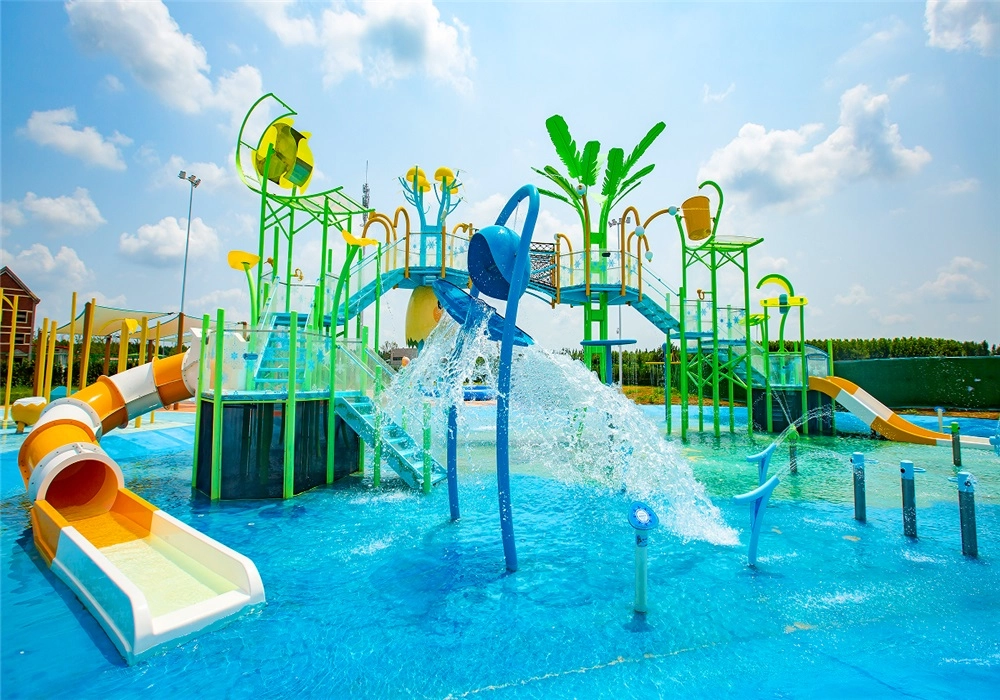
Public spaces are increasingly being designed around experiences rather than simple circulation, and water has become an important part of that shift. A well-planned Water Play Structure can introduce movement, sensory interest, and social interaction without requiring the scale of a traditional waterpark.
Jinchao approaches this type of aquatic environment through practical considerations such as venue conditions, visitor age groups, available space, and thematic requirements. The sections below focus on one of the most practical of these: how to size and zone a water play structure so that it suits the venue where it will be installed.
Zone the Structure by Age Group and Intensity
A single structure can serve several age groups if it is zoned. Toddlers need shallow, low-intensity features with parents within arm’s reach, while school-age children want taller structures, slides, and stronger water effects. Placing these zones side by side with clear boundaries lets families stay together without mixing very different activity levels.
Intensity should rise gradually across the structure. Gentle sprays at the entry, interactive features in the middle, and dump buckets or slides at the far side guide children toward more active areas naturally. This reduces the risk of small children being drawn into the busiest zone.
Zoning also helps operators. Separate zones can be shut down for cleaning or repairs while the rest of the structure stays open, and attendants can be positioned where activity is highest. Planning these boundaries during design is far easier than adding barriers afterwards.
Designing for Families and Different Venues
A successful aquatic environment starts with understanding how the surrounding space will actually be used. Resort splash pad design needs to account for circulation, sightlines, shade, drainage, seating, changing facilities, and access routes alongside the water elements themselves. A visually attractive layout can still create operational difficulties if caregivers cannot easily observe children or if wet and dry pedestrian paths repeatedly intersect.
Scale matters just as much. A compact hotel may benefit from a carefully arranged interactive zone, while a large destination resort may divide water play into several activity levels. The objective is not simply to add more equipment. Instead, different depths, spray patterns, movement zones, and resting areas can create a more varied experience within the same footprint.
Material selection and environmental conditions deserve similar attention. Outdoor installations are exposed to sunlight, moisture, cleaning routines, temperature changes, and frequent guest contact. A durable structure must also work with the surrounding drainage and water-management infrastructure. As a water park manufacturer, Jinchao’s Small water house is designed for amusement parks and hotel swimming pools, with a recommended pool area of 200–500 square units. Its construction combines hot-dip galvanized steel with a fiberglass slide, while the water house theme can be customized according to the venue’s requirements.
Creating Experiences Beyond the Splash Zone
A water feature becomes more useful when it connects with the wider identity of a destination. Family resort water features can reflect local architecture, natural surroundings, cultural motifs, or a property’s existing visual language. The result does not need to resemble a conventional waterpark. A themed play zone can instead become part of the landscape, giving children an activity while providing families with a recognizable gathering point.
Programming can also influence how these spaces perform throughout the day. Morning use may be dominated by younger children, while school-age visitors could become more active later in the afternoon. Seasonal events, themed decorations, or temporary activity schedules can add variation without requiring major structural changes. Such planning makes the space adaptable rather than dependent on a single pattern of use.
Building Flexible Public Water Spaces
The concept of water play for resorts extends beyond dedicated resort properties. Hotels, mixed-use developments, leisure districts, family entertainment centers, and public recreation spaces can all incorporate interactive aquatic areas when the infrastructure and operating model are suitable. This wider application reflects a change in how public amenities are evaluated: the question is increasingly about how effectively a space supports different forms of use rather than how impressive a single attraction appears.
Maintenance planning should be integrated into the original design. Access to pumps, drainage points, filtration equipment, electrical components, and service areas can influence long-term operating convenience. Staff also need practical procedures for inspection, cleaning, water-quality monitoring, and temporary closure when maintenance is required. A visually complex feature becomes much easier to manage when these service requirements have already been considered.
Equally important is the relationship between play areas and non-water spaces. Shade structures, seating, pathways, lockers, restrooms, food service, and landscaping can determine whether families remain in the area or simply pass through. Resort water attractions work more effectively as part of a broader visitor journey, where recreation, relaxation, and social interaction complement one another instead of competing for space.
Conclusion
Public water spaces are evolving into multifunctional environments that combine recreation, landscape identity, and social use. A carefully considered Water Play Structure contributes most when it is sized and zoned for the venue, with clear areas for each age group and enough space for caregivers, circulation, and maintenance.
Jinchao‘s experience with aquatic facilities provides one example of how these practical factors can be brought together, while family resort water features and water play for resorts continue to find applications across different hospitality and public environments. What matters most is not the number of water elements, but how naturally they fit the people, place, and purpose surrounding them.
