Choosing gas detection equipment involves more than comparing prices or selecting the instrument with the longest feature list. Industrial buyers must match sensors, sampling methods, operating conditions, service support, and compliance requirements to workplace hazards.
Five common mistakes can undermine this process: overlooking application needs, comparing specifications without context, neglecting after-sales support, ignoring usability, and failing to verify product suitability. Evaluating the gas detector manufacturer and its equipment carefully helps businesses make informed purchasing decisions.
- Choosing by Price Instead of Application
A frequent mistake is selecting a detector primarily because it fits the procurement budget. A low initial price may appear attractive, but equipment that cannot identify gases present at a facility will not meet operational requirements. Workplaces face different hazards, from combustible gases in process areas to toxic substances in chemical plants and oxygen deficiency in confined spaces.
Before requesting quotations, buyers should document target gases, concentration ranges, measurement locations, environmental conditions, and intended use. They should distinguish personal safety monitoring, area monitoring, and inspection tasks because each may require a different configuration.
A qualified gas detector supplier should ask about these conditions before recommending a model. Buyers should be cautious of proposals that treat one detector as suitable for every workplace without checking sensor compatibility.
- Comparing Specifications Without Understanding Them
A second mistake is comparing headline specifications without understanding their practical meaning. Sensor type, detection range, resolution, response time, accuracy, and repeatability all affect performance. A detector with several sensor channels is not automatically suitable for every combination of gases.
Sampling method also matters. Diffusion-based instruments allow surrounding gas to reach the sensor naturally, while pump-based models draw samples through an inlet or sampling line. The right choice depends on whether technicians monitor nearby air or collect samples from locations that are difficult to approach.
A gas detector manufacturer should provide technical documentation explaining sensor combinations and operating limits. Buyers should verify specifications against actual hazards rather than assuming that more features guarantee better performance.
- Overlooking Calibration and After-Sales Support
Gas detectors require attention after purchase. Sensors can drift, components can wear, and instruments may encounter dust, moisture, impacts, or challenging temperatures. Without appropriate calibration, functional checks, and maintenance, readings may become unreliable.
Procurement teams sometimes focus on delivery price and warranty duration while overlooking calibration services, replacement sensors, accessories, and technical assistance. This can increase downtime and complicate maintenance, particularly for companies operating multiple sites.
When assessing a gas detector supplier, buyers should ask for calibration recommendations, service arrangements, spare-part availability, manuals, and training resources. They should also establish who will maintain the instruments and how service records will be managed. A responsive gas detector manufacturer can help clarify these responsibilities.
- Ignoring Usability and the Working Environment
A technically capable instrument may still be unsuitable if workers find it difficult to operate. Complicated controls, unclear displays, uncomfortable handling, or alarms that are difficult to notice can affect consistent use. Equipment should fit employees’ tasks and working conditions.
Buyers should consider weight, grip, display readability, alarm options, battery arrangements, enclosure construction, and ease of inspection. Where combustible atmospheres may occur, the required explosion-protection certification must be checked against the intended hazardous-area classification. Water and dust protection should likewise be verified through documented ratings, not assumed from appearance.
A practical evaluation can help users identify issues before a large order is placed. The selected instrument should be understandable to the people who rely on it.
- Failing to Verify Product Configuration and Compliance
Another mistake is assuming that a model name or general description confirms suitability. Multi-gas detectors may support different sensor combinations, and not every configuration measures the same gases. Buyers should confirm the exact sensors supplied, their ranges and limitations, and whether the instrument is intended for the proposed application.
Compliance is equally important. Depending on location and use, businesses may need to verify explosion-protection approvals, applicable standards, and local regulatory requirements. Certificates should correspond to the actual model and configuration. Marketing statements alone are not sufficient evidence.
An experienced gas detector manufacturer should provide traceable product documentation and explain which requirements the equipment meets. If a specification or certificate is unclear, procurement teams should resolve the question before approving the order. A reliable gas detector supplier should welcome this verification.
What the Bosean BH-4S Can Offer
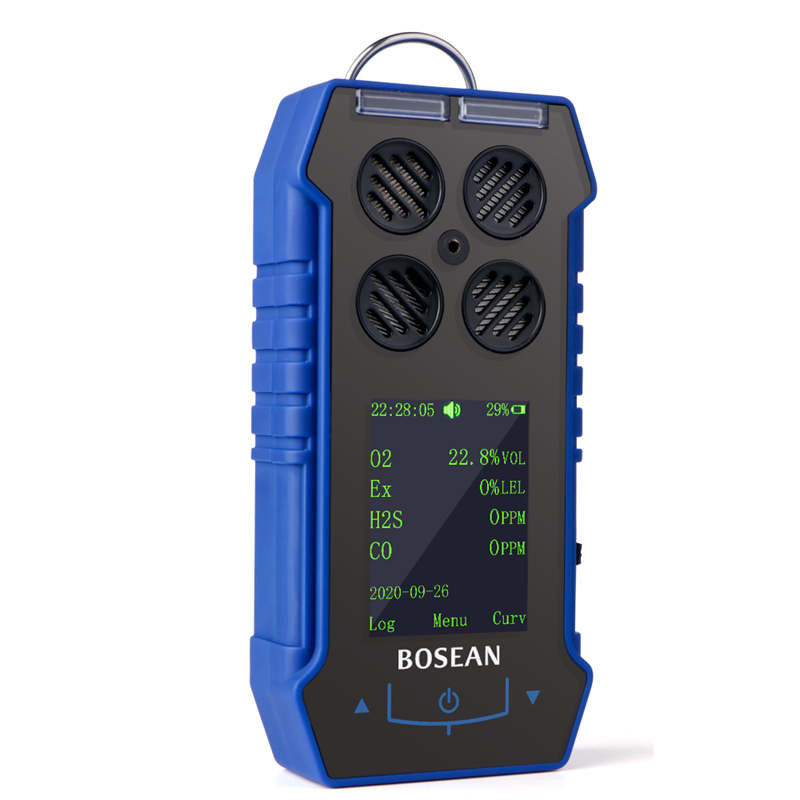
Bosean’s BH-4S 4 in 1 Multi Gas Detector illustrates why configuration and application details matter. The portable instrument is designed to detect four gases simultaneously and is intended for environments where explosion protection is required or toxic gas leakage may occur, including underground channels and mining applications.
The BH-4S uses natural diffusion sampling and high-sensitivity sensors designed to provide good sensitivity and repeatability. It also incorporates a 32-bit built-in microcontroller unit (MCU), with stated high reliability and self-adaptation capability. These features provide a basis for evaluating the instrument for suitable multi-gas monitoring tasks.
However, buyers should confirm which four gases are included in the proposed configuration, along with measurement ranges, accuracy, certifications, and operating limits. The instrument should be selected according to the site’s risk assessment rather than its four-gas designation alone.
Make Supplier Evaluation Part of Risk Management
Choosing detection equipment is a safety and operational decision as well as a purchasing exercise. Businesses can reduce avoidable mistakes by defining hazards, comparing technical specifications, planning calibration and service, assessing usability, and verifying documentation. A gas detector supplier that answers these questions clearly can help procurement teams make informed decisions. Checking the actual configuration and intended application of products such as Bosean‘s BH-4S helps organizations build a monitoring program around site requirements rather than assumptions.
